

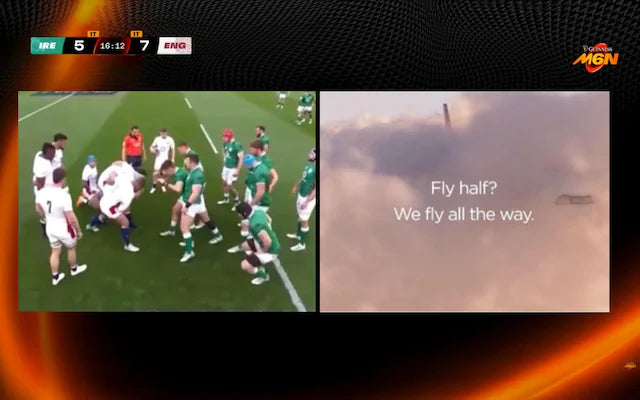
ITV found itself under fire on Thursday 5th February during its Six Nations coverage, after trialling split-screen advertising during live play — a move that many rugby fans felt crossed a line.
The format saw adverts run alongside the match action rather than during traditional breaks, shrinking the live game into part of the screen while branded content played simultaneously. While split-screen ads are common in some U.S. sports broadcasts, they remain relatively rare — and controversial — in UK rugby coverage.
Social media reaction was swift. Fans took to X and Instagram to complain about missed moments, broken immersion and what they described as a “TV-first, fan-second” approach. For a sport that prides itself on tradition and uninterrupted flow, many felt the experiment diluted the viewing experience at key moments of play.
From a commercial standpoint, ITV’s motivation is clear. Live sport remains one of the few environments where broadcasters can still command premium ad inventory, and split-screen formats offer a way to increase revenue without extending broadcast time. With rights fees continuing to rise and ad markets under pressure, broadcasters are increasingly looking for new ways to monetise live audiences.
But the backlash highlights a delicate balance. While advertisers are eager for greater visibility and guaranteed attention, fans expect live sport — especially major tournaments like the Six Nations — to feel sacrosanct. The risk for broadcasters is that short-term revenue gains could come at the expense of long-term viewer trust.
The reaction to ITV’s experiment may serve as a warning shot. Innovation in sports advertising is inevitable, but in rugby, how and when brands appear may matter just as much as whether they appear at all.


Super Bowl 2026: Big Crowds, Bigger Brand Power
Genius Sports Makes Bold $1.2bn Move to Buy Legend and Supercharge Betting-Media Strategy