

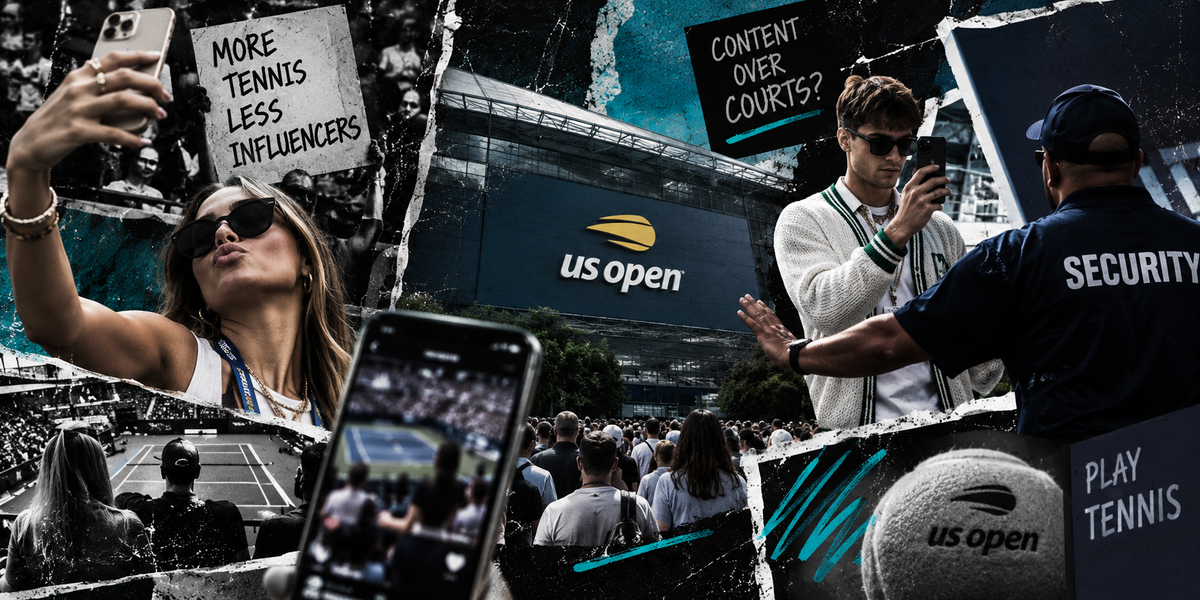
Wimbledon has decided the fix for influencer disruption is to stop calling influencers accredited. It's a policy that photographs well and solves almost nothing, because the people causing the actual chaos were never inside the system it's tightening.
The All England Club has confirmed there'll be no dedicated accreditation route for content creators, with priority staying firmly on journalists and established media - a direct response to the scenes at this year's US Open, where a hospitality-box group filmed and shouted through Naomi Osaka's first-round match until the umpire had to step in. The USTA was quick to point out those responsible weren't part of its own accredited creator programme. Which is the whole problem with Wimbledon's response: it's closing a door the disruptors never walked through. JiDion didn't need a media pass to bring a barber into Arthur Ashe Stadium, and he didn't have one when he got a lifetime ban for an airhorn at Wimbledon in 2022 either. Tightening accreditation polices the creators who were already playing by the rules, while doing nothing about the ones who weren't looking for a pass in the first place.
The more useful read is what Osaka said, almost in passing: creators are good for growing the sport, but only "in a way that everyone knows the rules and the etiquette." That's not an accreditation problem - it's a management problem, and it's exactly the gap between "we let influencers in" and "we activated influencers properly." A hundred creator credentials at the US Open was a genuine attempt to reach an audience that doesn't watch broadcast tennis. The disruption didn't come from that programme; it came from the vacuum around it, where anyone with a ring light and no brief could sit in a hospitality suite and treat a Grand Slam like a stunt set. If tournaments and rights-holders don't design what creator access actually looks like - behaviour, briefing, boundaries, a reason for being there - banning the category doesn't remove the incentive to gatecrash it. It just removes the version of it that was doing the job properly.
Wimbledon's real vulnerability isn't influencers. It's that "no formal category" reads as a policy, when the actual gap - governing who gets to represent your event and how - hasn't been touched.
Letting creators into your event isn't the risk. Letting them in without a brief, boundaries or a plan is. Talk to Rocket Yard about building an influencer programme that gets the reach without the umpire having to step in.
Credit: Insider Sport


A$AP Rocky Didn't Join Man City and AC Milan's World - He Made Them Join His
The Greatest Golf Story Never Told