

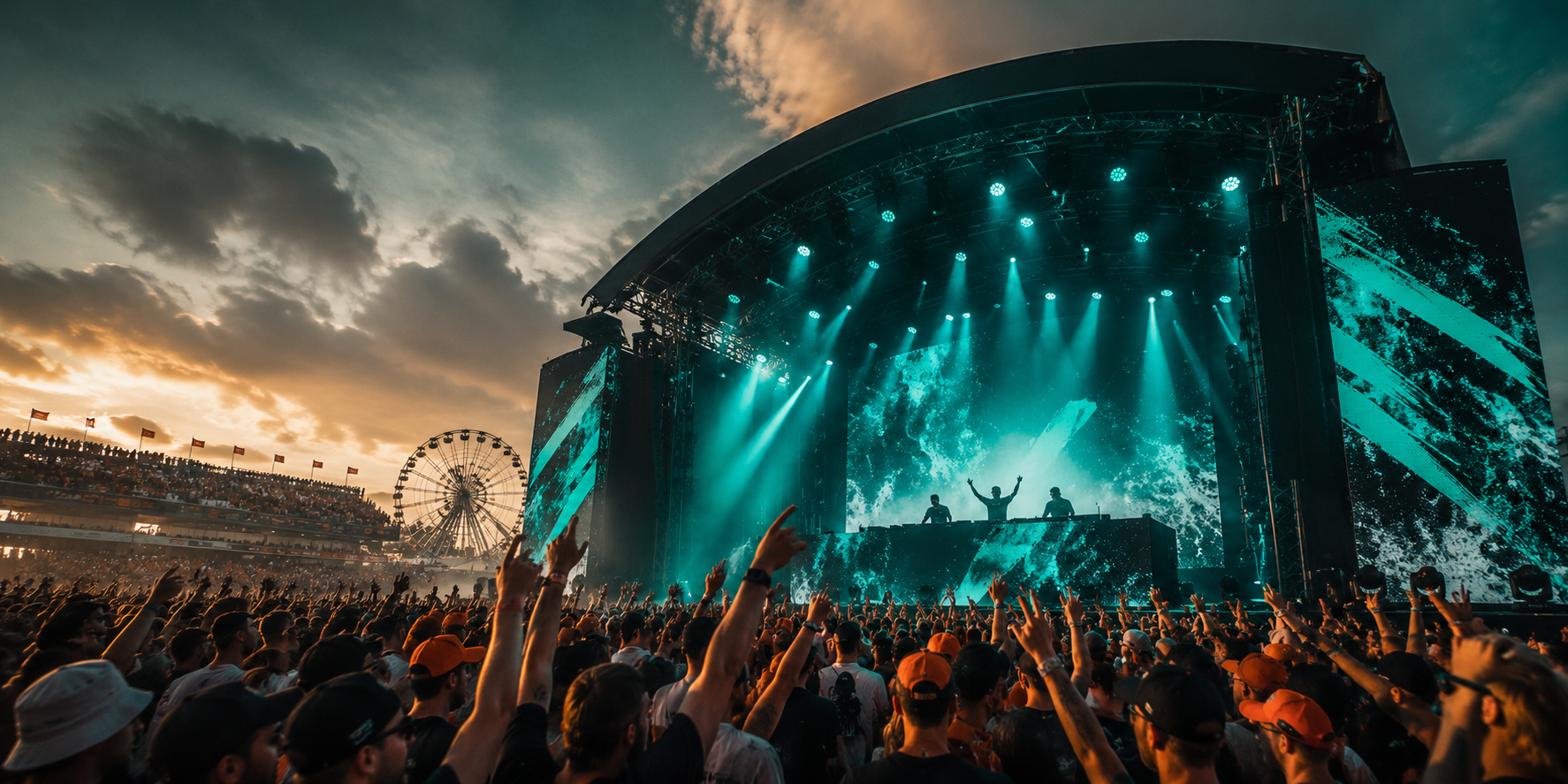
Every ticket to the final Dutch Grand Prix doubled as a festival pass - Martin Garrix headlined the Sunday finale, Afrojack closed out Friday, and the rest of the three-day entertainment bill (Snollebollekes, Flemming, Snelle, Kraantje Pappie) ran almost entirely on Dutch acts. None of it was an upsell. A GA ticket bought on race day alone got a fan the same access to every concert as a hospitality guest.
That's a deliberate structural choice, and it cuts against how most affluent-sport activation still works. The default model is to build the best experience and then price access to it in tiers - hospitality suites, VIP lounges, meet-and-greets - so the deepest engagement goes to whoever spends the most. F1 races like Zandvoort flip that: the emotional peak of the weekend, a headline DJ set from a genuine Dutch superstar, was baked into the cheapest ticket in the building.
Why it matters: Tiering access by spend optimises for revenue per fan today. Untiering the emotional peak optimises for loyalty that outlasts the event - and loyalty is what actually protects a sponsorship or a franchise. A brand that only shows up in the premium tier is invisible to the 80% of fans who'll never buy that ticket. A brand attached to the thing every ticket-holder gets is remembered by all of them.
Before your next activation brief, check where the highest-emotion moment of the experience sits in your tier structure. If it's locked behind the top tier, you're optimising for the smallest, already-loyal slice of the audience - move at least one high-emotion touchpoint (a performance, a Q&A, a giveaway moment) into the base tier and measure whether reach converts to retention differently.


Burnley's Shirt Sponsor Lasted Fewer Days Than a Pre-Season Tour
A$AP Rocky Didn't Join Man City and AC Milan's World - He Made Them Join His