

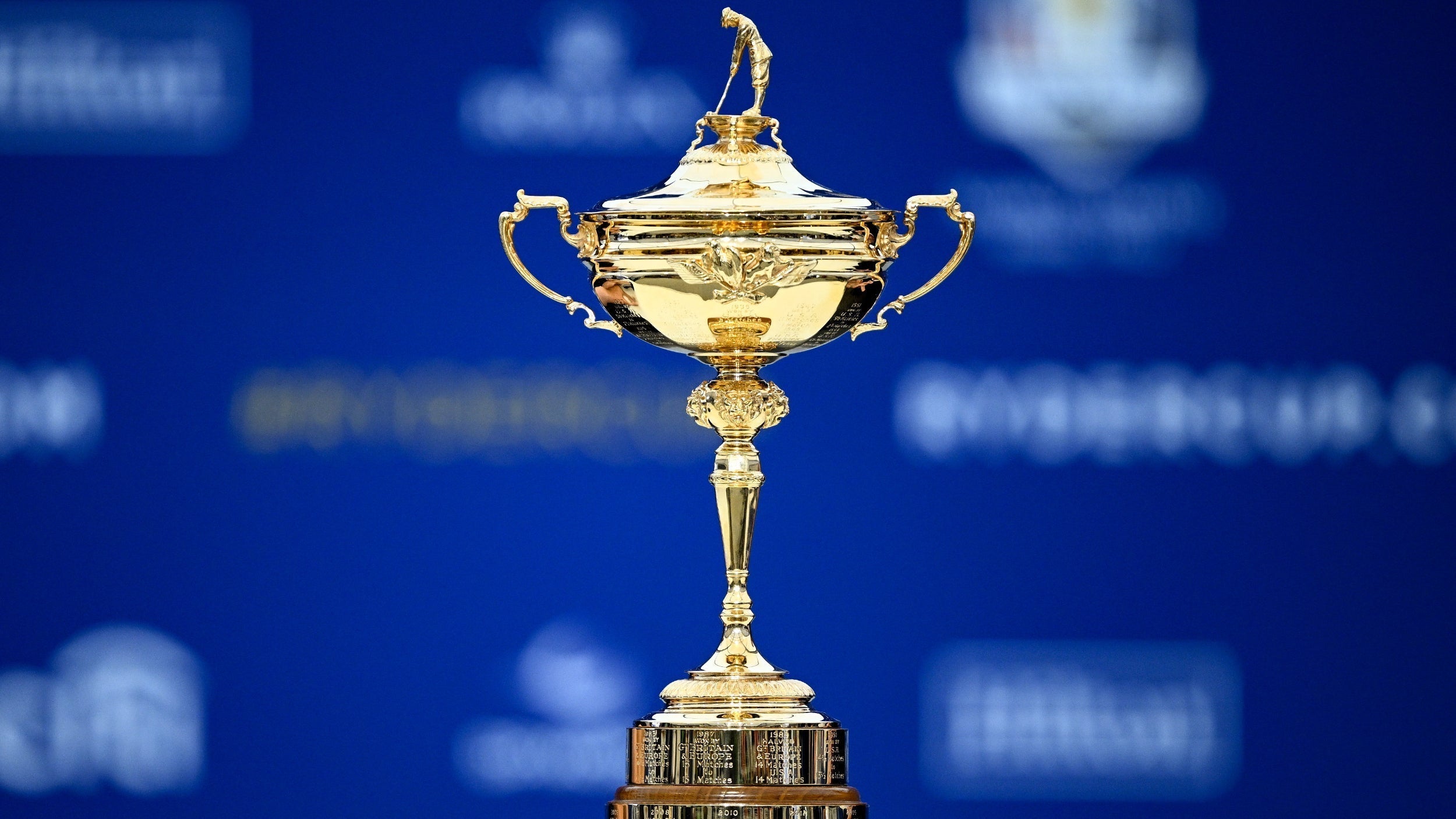
Winning on the road in the Ryder Cup has always been one of the most elusive achievements in golf. The Ryder Cup has evolved dramatically since Europe joined the competition in 1979, transforming from a one-sided U.S. showcase into one of sport’s most fiercely contested events. Yet through all the drama and all the swings of momentum, one constant has held true: the home team usually wins.
In the modern era (1979–2023), only six teams have managed to capture the Ryder Cup on foreign soil. For the United States, that happened just twice: a star-studded team led by Jack Nicklaus won at Walton Heath in 1981, and Tom Watson’s squad edged Europe at The Belfry in 1993. For Europe, the breakthrough came in 1987 at Muirfield Village, where Tony Jacklin’s team shocked the Americans in their own backyard—a moment often cited as the birth of the modern Ryder Cup rivalry. Europe followed with landmark road wins in 1995 at Oak Hill, 2004 at Oakland Hills, and most famously in 2012 at Medinah, the “Miracle” comeback led by José María Olazábal’s side. Those victories are remembered not only for the trophies they delivered but for the sense that they were historic exceptions to a much larger rule.
That rule is simple: away teams face an uphill climb that borders on the impossible. Since 1995, there have been just two away wins in 15 Ryder Cups, both by Europe. The United States hasn’t won in Europe for more than 30 years. And the most recent five contests, from 2014 through 2023, have all gone to the host nation. In other words, the current generation of Ryder Cup players has known nothing but home dominance.
Why is it so difficult? A few key factors explain the imbalance:
-
Course setup: The host nation controls the course and can tailor conditions to favor its team’s strengths. In Europe, that often means tighter fairways and thicker rough to emphasize accuracy and strategy. In the U.S., venues are usually set up for length and aggressive play. Those subtle changes compound across three days of foursomes, fourballs, and singles.
-
Crowd influence: The Ryder Cup is unlike any other golf event. The home fans are loud, partisan, and relentless, especially in the United States. A well-timed roar or a chorus of boos can alter the pressure on a player facing a crucial putt. For visitors, the energy can be draining and disorienting; for the home side, it’s fuel.
-
Preparation and rhythm: The host team enjoys a familiarity with the course, often with players who have competed in majors or Tour events there. They also control scheduling and practice opportunities. Visiting teams arrive with less time to adjust, and in match play, even small margins matter.
When you put those elements together, the numbers start to make sense. Roughly three out of four Ryder Cups stay with the host. The narrative of an away win—whether Europe’s unity in 2004 or their miracle in 2012—becomes legendary precisely because it is so rare. For any team, lifting the Ryder Cup on foreign soil is not just a victory. It is an achievement that defines careers, rewrites expectations, and cements legacies.
“Right now” odds for Team Europe in New York (Bethpage Black)
As of 11 September 2025 (UK time), books broadly make the U.S. a modest favorite, with Europe a live underdog:
-
Oddschecker roundup: USA 1/1, Europe 6/4, Tie 12/1. (Europe 6/4 ≈ 40% implied).
-
Ladbrokes preview: USA 8/11 favorite; Europe quoted at around 11/8 (≈ 42% implied).
-
SuperBook (via VegasInsider): USA -135, Europe +150, Tie +1300 (three-way); two-way “to lift the trophy”: USA -135, Europe +115. (Europe +150 ≈ 40% implied in the three-way).
So the market is effectively saying Europe ~40–42% to win outright in New York, with a small additional pathway via a tied match and retaining/lifting scenarios depending on book.
Conclusion
In the modern era, winning away is the exception, not the rule—only ~27% of Cups since 1979 have gone to the road team, and none since Europe’s “Miracle at Medinah” in 2012. Bethpage’s home edge and atmosphere are baked into prices, which currently give Europe roughly a two-in-five shot. That’s shorter than historical “away” rates suggest—reflecting how strong (and battle-tested) this European core is—but the burden of proof still sits with the travelers. If Europe do pull it off in New York, it would be their first away win in 13 years and one of the era’s most significant road results.


How Bryson DeChambeau is Redefining Golf in the Age of Social Media
NFL MVP Josh Allen swaps Nike for New Balance