

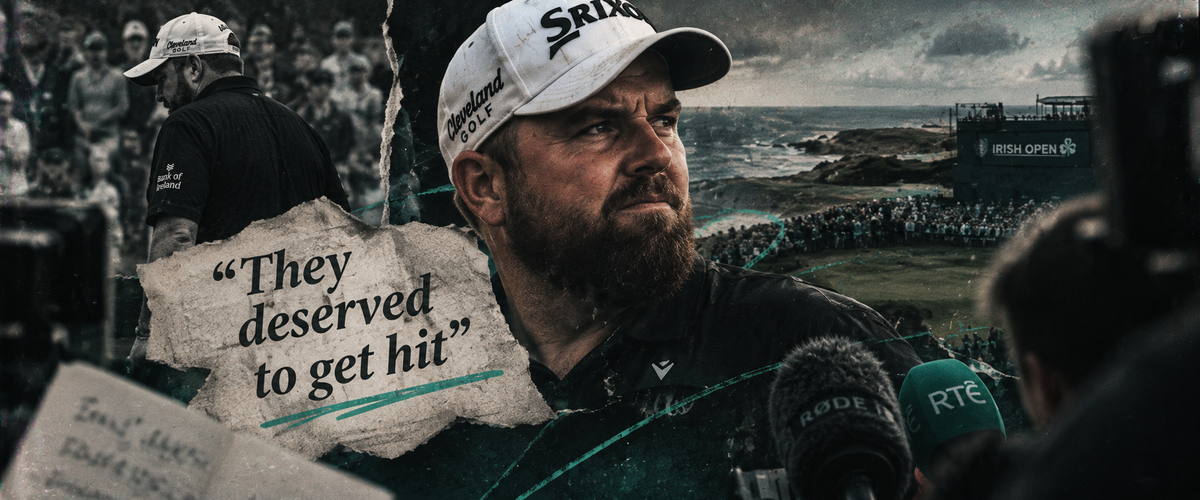
Shane Lowry didn't lose control of a crowd at the Irish Open. He lost control of a microphone.
What happened:
On the 18th at Doonbeg during round three, Lowry pulled his tee shot left toward a group of marshals and volunteers near the ropes. His caddie shouted "fore" multiple times; the group didn't move. An on-course mic then caught Lowry saying, "They deserve to get hit." Nobody was struck. He went on to win his home Open by four shots.
The clip went wider than his golf. Within hours it wasn't a leaderboard story, it was a character story - and Lowry never got a vote on which one ran.
Why it matters for anyone paying an athlete to represent a brand:
A hot mic is not a PR crisis in the way a bad tweet is. Nobody drafted it, nobody approved it, and there's no delete button. The gap between "frustrated athlete under pressure" and "disgusting remark, sparks outrage" was created entirely by which four seconds got clipped and captioned first. That's not a Lowry problem. That's every athlete with live audio on them for four straight days, every week, on every tour you sponsor into.
Most brands still budget for the message - the ad, the activation, the caption - and treat what happens off-script as someone else's risk to manage. That's backwards. The moments that actually move public perception of the people you're associated with are almost never the sanctioned ones. Live audio and on-course mics now generate more brand-relevant exposure, good and bad, than most official athlete content does.
The actionable takeaway:
If you're sponsoring, endorsing, or building content around a competitive athlete, your reputational exposure isn't in their media training - it's in the fourteen unscripted hours around it. Build the response plan for that before you need it: who reacts, on what timeline, with what tone, and - critically - whether the plan is "apologise" or "add context," because those are different bets with different payoffs. Lowry's team chose context over apology and let it ride. That was probably the right call for a player who'd just delivered the strongest possible counter-argument - winning - but it won't be the right call for every client, every time.
The lesson isn't about Shane Lowry's temper. It's that the moment your athlete's reputation moves fastest is the one moment nobody's managing.


The Greatest Golf Story Never Told
The Best Activations at the Singapore Grand Prix Don't Require a Ticket