

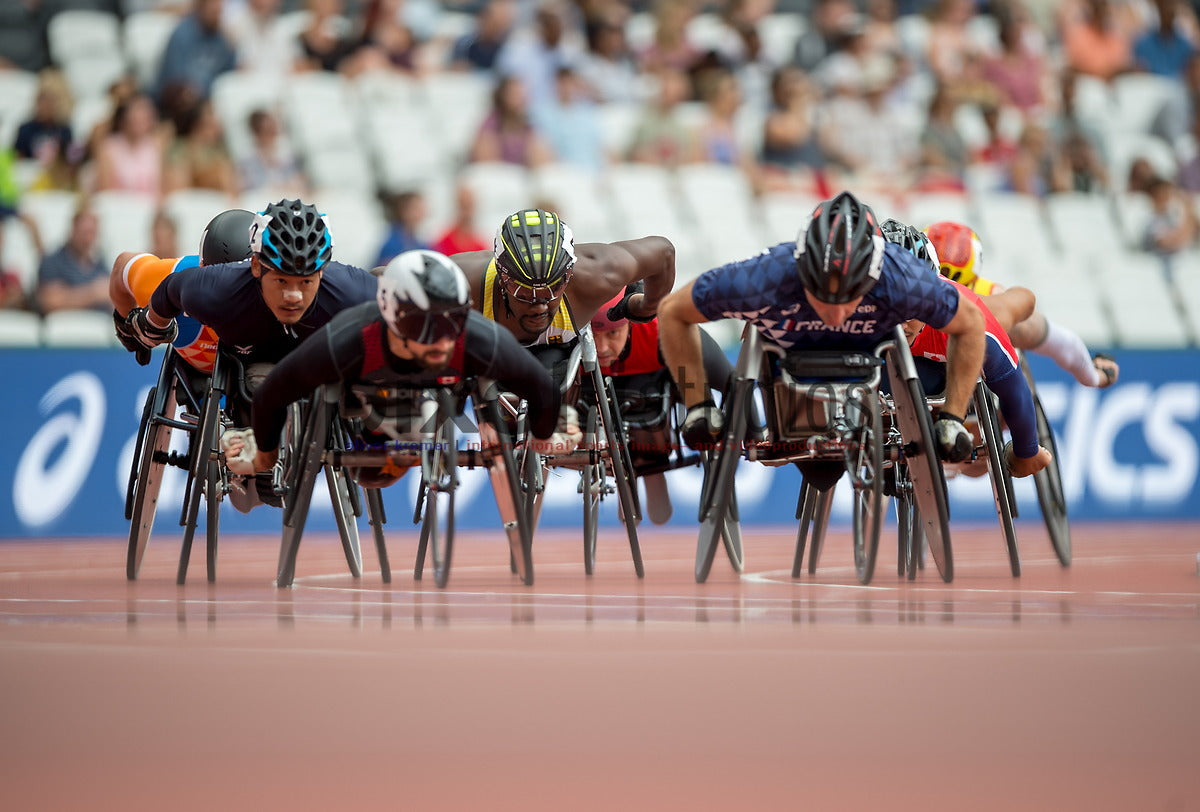
For decades, the Olympic Games have represented a key opportunity in global sports sponsorship. Brands invest hundreds of millions to associate themselves with one of the world’s biggest sporting events, hoping to capture attention, credibility and global reach. But in the shadow of the Olympic rings sits an opportunity that many sponsors are still underestimating: the Paralympic Games.
Since 2021, Olympic sponsorship agreements have automatically included Paralympic rights (MAD, 2025). On paper, this means the world’s largest brands already have access to one of sport’s fastest-growing platforms. In practice, however, many sponsors still treat the Paralympics as little more than a compliance requirement or a charitable add-on rather than a strategic marketing opportunity.
That approach increasingly looks like a missed opportunity.
A rapidly growing market
The adaptive sports ecosystem is no longer a niche segment. It is a rapidly expanding global market driven by innovation, digital engagement and shifting cultural attitudes toward disability.
Research suggests the adaptive sports market is already worth $5 billion and is projected to more than double to $11 billion by 2030 (MAD, 2025).
At the same time, audience engagement with the Paralympic Games is growing at an unprecedented pace. During the Paris 2024 Paralympics, audiences consumed 763 million hours of live coverage - an 83% increase compared with Tokyo 2020 - while internet searches related to the Paralympics surpassed one billion for the first time (MAD, 2025)
Digital engagement has followed the same trajectory. IPC (International Paralympic Committee) generated over 1.6 billion video views across their platforms in 2024, demonstrating the scale of audience interest beyond traditional broadcast formats (MAD, 2025)
These audience trends sit alongside a broader economic reality: the disability market itself represents one of the most undervalued consumer segments globally. In the United States alone, more than 61 million people live with a disability, representing over $1 trillion in annual purchasing power when family networks are included (Sports Business Journal, 2026). Importantly, disabled sports fans are also highly engaged consumers. Research from Sports Innovation Lab shows they make 24% more sport-related purchases than non-disabled fans and spend 37% more per transaction, while also being 27% more likely to stream live sports content (Sports Business Journal, 2026).
Taken together, these indicators suggest that Paralympic sport represents not only a cultural movement but also a significant and growing commercial ecosystem.
The Olympic saturation problem
One of the biggest challenges facing Olympic sponsors today is saturation. The Olympic Games provide incredible global reach, but the sponsorship landscape is crowded, expensive and increasingly difficult for brands to differentiate within.
The Paralympics offer a different proposition.
Because fewer brands activate their Paralympic rights at scale, the space remains less cluttered and more open to meaningful storytelling. For sponsors, this creates a rare opportunity to stand out rather than compete for visibility among dozens of other partners.
In addition, Paralympic sponsorships are increasingly associated with higher levels of brand trust and authenticity. Consumers can quickly identify tokenistic campaigns. Partnerships linked to adaptive sport, however, often require visible and tangible action, which can generate stronger emotional connections with audiences (MAD, 2025).
Case Study: London 2012 Games
One of the clearest examples of the commercial and cultural impact of Paralympic sponsorship comes from the London 2012 Games.
Prior to London 2012, public awareness and perception of Paralympic sport in the United Kingdom were relatively low. Research conducted before the Games found that 82% of people could not name a single British Paralympian, while 50% believed disabled people could not achieve the same things as able-bodied athletes (Marketing Society, 2013).
Two brands helped transform that narrative: Channel 4 and Sainsbury’s.
Channel 4’s coverage of the Paralympic Games dramatically expanded the event’s reach, providing 150 hours of television coverage and an additional 350 hours of online streaming. The broadcaster also developed tools such as the “LEXI system,” which helped audiences understand the different classifications of disability across sports, making the competition more accessible and easier to follow (Marketing Society, 2013).
At the same time, Sainsbury’s launched a long-term activation strategy built around community engagement and grassroots participation. Through initiatives like the “Million Kids Challenge,” more than 2.4 million children from over 8,000 schools were given the opportunity to try Paralympic sports (Marketing Society, 2013).
The results were significant. By the time the Games began, awareness of the Paralympics had risen from 16% to 77%, while the proportion of people who could name a British Paralympian more than doubled. Nearly 40 million people in the UK watched the Paralympic Games on television, and the campaign delivered measurable commercial results for Sainsbury’s, including 5.6% sales growth during the period surrounding the Games (Marketing Society, 2013).
The success of London 2012 demonstrated the impact a meaningful sponsorship can do - it can reshape cultural perceptions while delivering tangible business outcomes.
A new generation of brand partnerships
Since the 2012 Paralympics, other global brands have also been demonstrating how activating Paralympic sponsorship can deliver both cultural relevance and commercial impact.
Toyota’s “Mobility for All” initiative at the Paris 2024 Games, for example, involved co-designing accessibility solutions with athletes and deploying more than 450 mobility devices during the Games, integrating inclusivity directly into the company’s product innovation strategy (MAD, 2025).
Similarly, insurance group Allianz has supported the Paralympic movement since 2021 and recently extended its global partnership through 2032. The company supports more than 50 para-athletes worldwide while producing educational content designed to increase understanding of Paralympic sport (MAD, 2025).
These partnerships illustrate a broader shift in how brands approach sponsorship - moving from simple logo placement toward deeper collaboration with athletes, communities and technology innovation.
Milan Cortina Paralympics 2026
This year’s Paralympics games are driving sport innovation further, both in terms of marketing and in terms of equipment and sports access.
At this year’s winter games, athletes will complete at the highest level in Para Ice Hockey, Para Biathlon, wheelchair curling and more. Innovative equipment, more accessible venue infrastructure and new digital viewing solutions support the growth of a broader fanbase (Sports Business Journal, 2026)
For example, the Salomon Adaptive Project is developing affordable prosthetics for skiing and snowboarding by working directly with Paralympic athletes, expanding both product innovation and participation in winter sport (Sports Business Journal, 2026). This not only an essential step towards broader sports access, but also a way in which Salomon has been able to expand their market.
Broadcasters are also investing in accessibility. NBCUniversal has expanded features such as audio descriptions and enhanced accessibility tools for the Milan Cortina Olympic and Paralympic Games, recognising that accessibility improvements can expand audiences and create new commercial value (Sports Business Journal, 2026).
These innovations illustrate how accessibility initiatives often lead to broader improvements in technology, product design and fan engagement across sport.
The next growth moment
Looking ahead, the next Paralympic cycle may represent a significant opportunity for the movement.
The Los Angeles 2028 Paralympic Games are widely expected to accelerate global growth in adaptive sport. California alone is home to approximately 4.5 million people with disabilities, while the region hosts some of the world’s most influential adaptive sports organisations and athlete development programmes (MAD, 2025).
Industry research also suggests that more than 81% of adapted sport organisations believe LA28 will act as a catalyst for future market growth, reinforcing the idea that the Paralympic movement is entering a new phase of commercial expansion (Sports Business Journal, 2026).
A window for brands to lead
For sponsors, the implications are clear. The Paralympics represent a window of opportunity within the global sports sponsorship landscape.
The market is growing, audience engagement is increasing, and cultural relevance is expanding rapidly. Yet many brands already holding Paralympic rights have not fully activated them.
The lesson from other emerging sports markets - particularly women’s sport - is that early adopters often capture the greatest long-term value.
For brands willing to move beyond the Olympic spotlight, the Paralympics may represent one of the most compelling sponsorship opportunities in global sport today.
Sources
-
MAD (2025). Paralympic sport is the $5 billion market sponsors are sleeping on.
https://www.madfestlondon.com/insights/articles/paralympic-sport-is-the-5-billion-market-sponsors-are-sleeping-on/ - Sports Business Journal (2026). Paralympics will unlock value in a segment primed for growth.
https://www.sportsbusinessjournal.com/Articles/2026/03/02/paralympics-will-unlock-value-in-a-segment-primed-for-growth/ - Marketing Society (2013). Sainsbury’s & Channel 4: Winning for the Paralympics.
https://www.marketingsociety.com/sites/default/files/Sainsburys%20&%20Channel%204%20Winning%20for%20Paralympics.pdf - Morgan Lewis (2024) New Opportunities for investors in the growing women’s sports sector.https://www.morganlewis.com/-/media/files/publication/morgan-lewis-title/white-paper/2024/new-opportunities-for-investors-in-the-growing-womens-sports-sector.pdf


Will the 2026 FIFA World Cup boost soccer’s popularity in the USA?
Women’s Soccer Sponsorship Up 53% Since 2022/23