

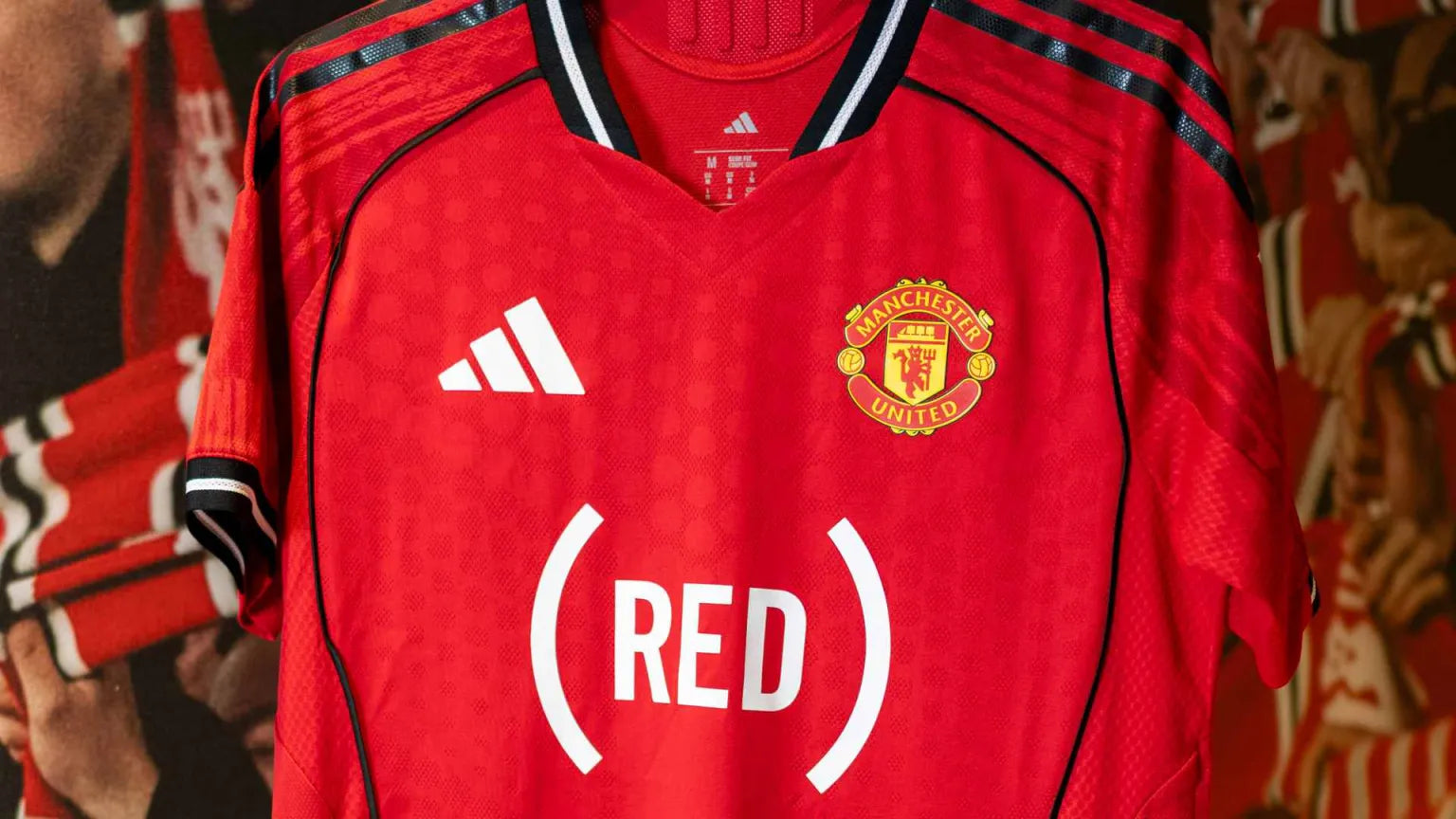
In sport marketing, sponsorships have traditionally been about visibility. Brands secure logo placement on kits, stadiums or advertising boards to reach fans. But every so often, a story comes along that shows how powerful these commercial relationships can be when they go beyond branding. Manchester United’s recent decision to temporarily replace their standard front-of-shirt sponsor with the charity (RED) is one such moment.
For two fixtures in the 2025–26 season, Manchester United’s men’s and women’s teams will wear shirts featuring the (RED) logo instead of their usual sponsor, Snapdragon. This is not the result of a sponsor stepping away or a gap in commercial support. It is a deliberate and strategic choice made possible through the existing partnership.
As part of Manchester United’s agreement with Snapdragon, the brand is able to nominate a charitable organisation to take the shirt’s prime position for selected matches. In this case, that organisation is (RED), which works with global partners to tackle health injustice and support the Global Fund’s fight against HIV/AIDS, tuberculosis and malaria.
The activation also includes limited-edition shirts and merchandise, with profits donated to the cause and matched by major philanthropic partners. Importantly, this initiative sits alongside a long-term, high-value commercial agreement rather than replacing it, demonstrating how flexible and impactful modern sponsorship arrangements can be.
From a sport marketing perspective, this highlights the difference between sponsorship and partnership. A traditional sponsorship buys presence and exposure. A partnership creates space for collaboration, shared values and meaningful activation. Manchester United’s front-of-shirt deal with Snapdragon is reported to be worth more than £60 million per year, yet this moment shows that value is not measured by logo time alone.
For fans, purpose-driven activations like this feel more authentic. They show that clubs and brands can use sport’s global reach to promote causes that matter, without undermining commercial objectives. For sponsors, it is an opportunity to build credibility, generate positive attention and deepen emotional connection with audiences.
As expectations around brand behaviour continue to evolve, we are likely to see more examples of sponsorships being used as platforms for wider impact. Manchester United’s (RED) shirts are a reminder that when partnerships are built on trust and shared purpose, sport marketing can achieve far more than visibility alone.


Is Live Sport Still The Centre Of The Fan Experience?
WSL Reports UK£8.2m Loss For 2024/25 But Expects Profitability This Season